

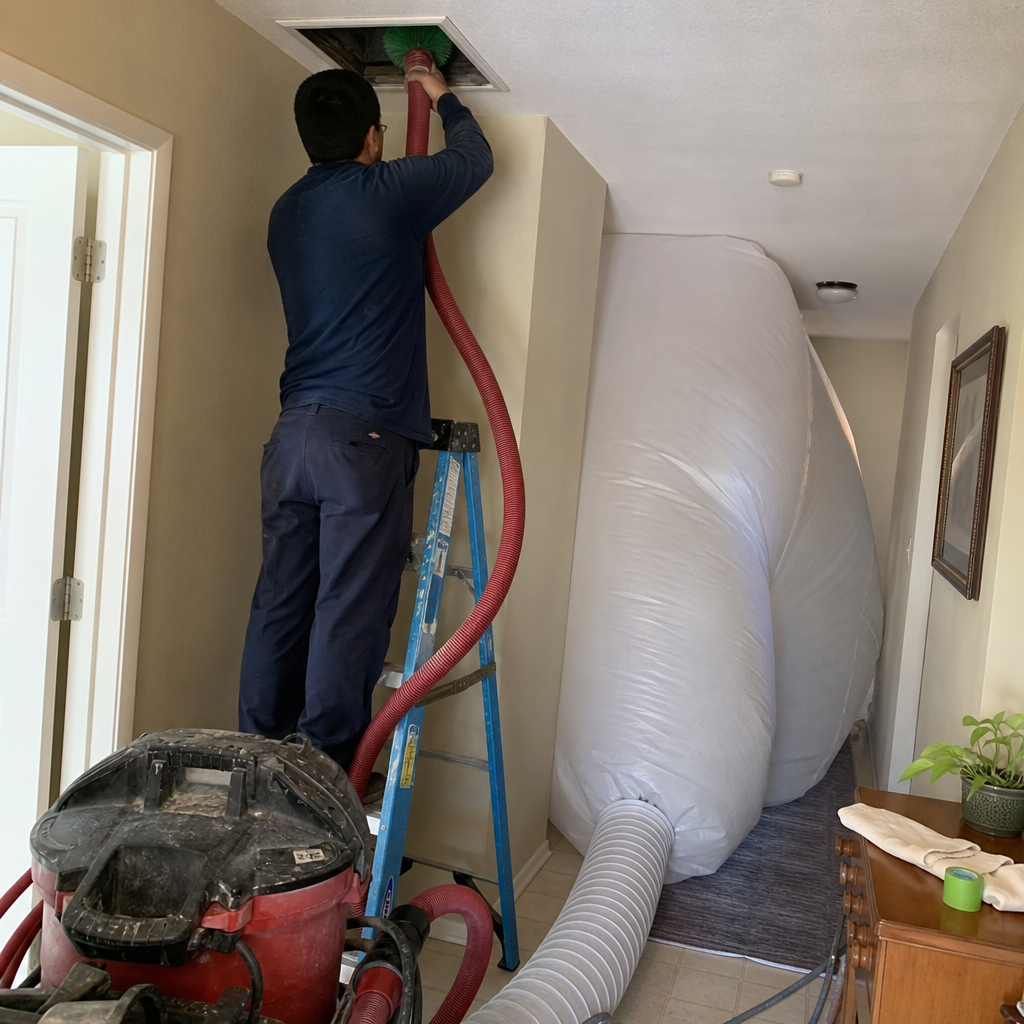
Fast, Reliable Air Quality & Sanitizing Across Corona
Air quality sanitizing in Corona, CA typically runs $275–$650 for whole-home duct treatment and is usually completed same day when you call before noon. Corona’s unique position at the 91 and 15 freeway interchange creates a compounded indoor air challenge — diesel particulate, Santa Ana dust, and wildfire smoke all load into residential ductwork at rates far exceeding coastal cities just 25 miles west.
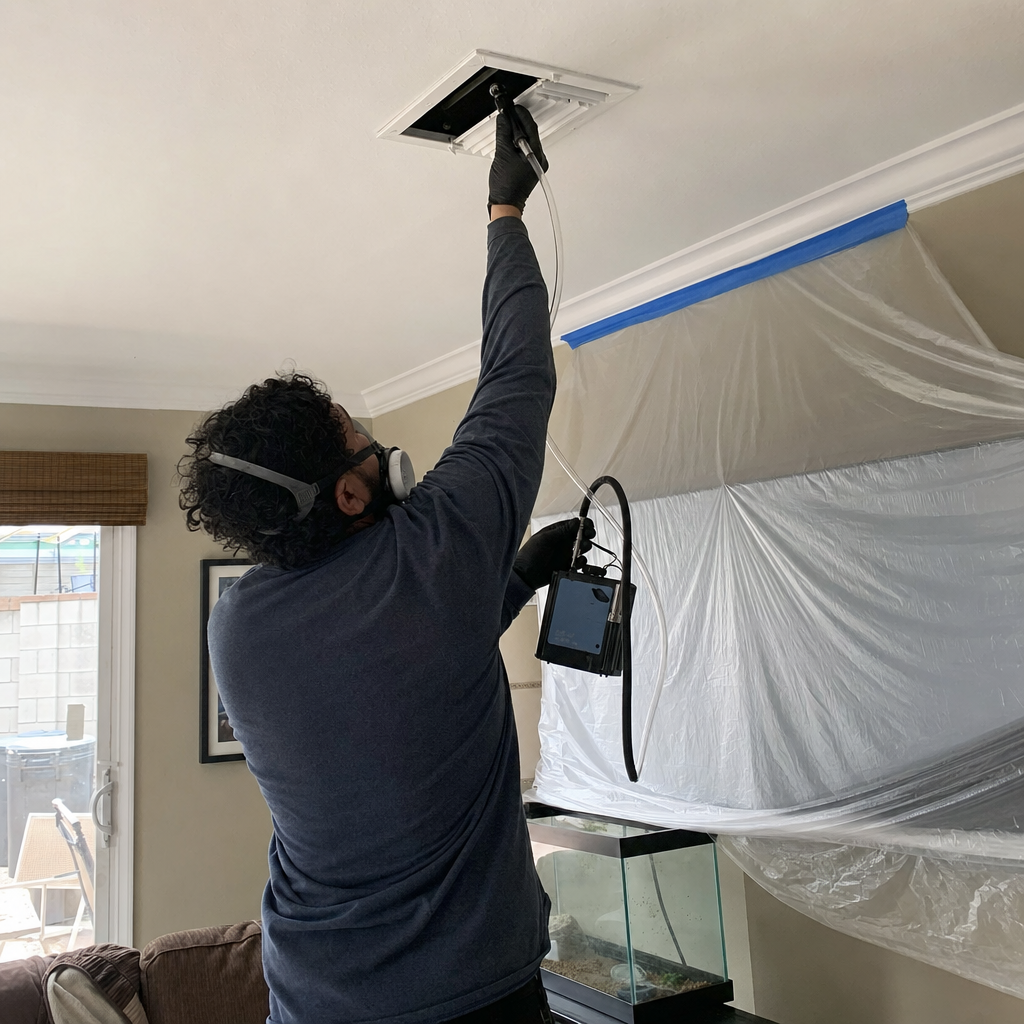
We’re Meridian Air Duct Cleaning Service Riverside, and we’ve been driving out to Corona homes since Eric Bailey started this company 11 years ago. From the older tracts near the 91/15 interchange in 92879 to the newer builds in South Corona’s Temescal Valley, we know the local housing stock and what hides inside it. If your vents are blowing a “smoggy” smell every time the system kicks on, or if your filters turn dark gray within days of a Santa Ana event, that’s not normal — and it’s fixable. Call us at (844) 556-2174 for a free estimate.
Why Meridian Air Duct Cleaning Service Riverside Is Corona’s Preferred Air Quality & Sanitizing Company
Over 1,200 verified reviews averaging 4.9 stars don’t come from showing up with a shop vac and a bottle of spray. Eric Bailey personally leads every job as the lead technician, not a subcontractor he’s never met. When you hire Meridian, you get the owner on your property — the person most invested in your outcome.
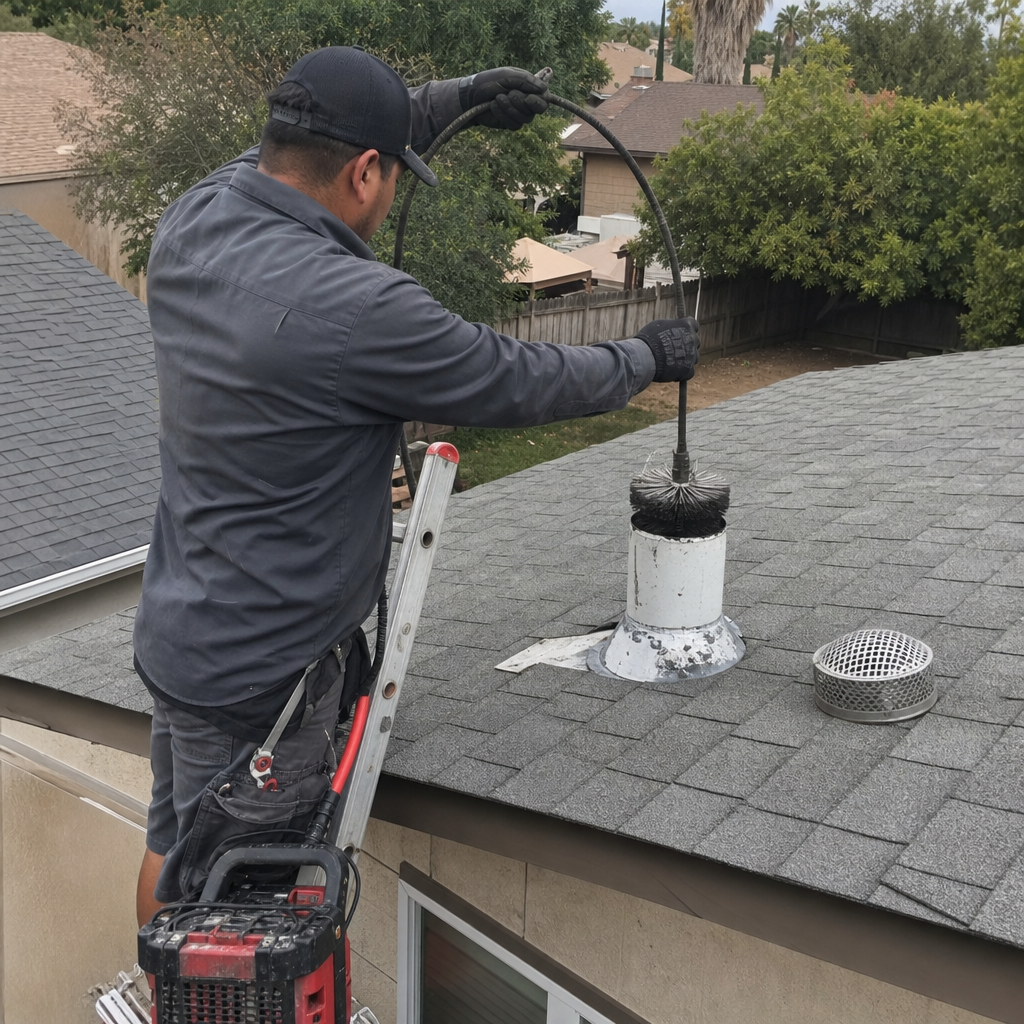
Our Air Quality & Sanitizing team has worked in Corona long enough to recognize the specific failure patterns here. We’ve pulled apart flex-duct returns in 92880 tracts and found black, greasy diesel particulate coating the interior — a problem that standard sanitizing alone won’t touch. We show up with Rotobrush and Nikro equipment as standard, not as an upsell, because Corona’s air quality reality demands professional-grade extraction before any sanitizing agent can work.
Response time matters when your HVAC is circulating contaminants. From our Riverside base, we typically reach Corona properties within 45–60 minutes during standard hours, same-day for calls received before noon. Emergency service is available for situations where mold or bacterial contamination poses immediate health concerns.
We’ve earned repeat business from Corona homeowners who initially called us for duct cleaning and returned for air purifier installation after seeing what came out of their system. That trust is built on showing the problem, explaining the fix, and letting the results speak.
Our Air Quality & Sanitizing Services in Corona
Mold Treatment
Mold in Corona ducts almost always follows a predictable path: standing debris in sagging flex-duct low spots, combined with summer humidity that pushes into the 70s despite the dry reputation. The 92880 and 92881 tracts are particularly prone — builder-grade flexible ductwork installed in the 1990s and 2000s was often improperly supported, creating dips where condensation collects. We don’t spray and hope. Our process starts with Rotobrush mechanical agitation and HEPA vacuum extraction to remove the organic material mold feeds on, then apply EPA-registered antimicrobial treatment. In South Corona’s 92883, where multi-zone systems create more complex airflow patterns, we map the full duct layout before treatment to ensure no branch line is missed.
Bacteria Sanitizing
Bacterial contamination in Corona ducts presents a unique challenge: the diesel soot film that coats returns near the 91/15 interchange acts as a protective matrix for bacteria, shielding them from standard sanitizing sprays. We’ve learned this the hard way — early in our Corona work, we’d treat a system only to have the “smoggy” odor return within weeks. Now we pre-clean all heavily soiled ductwork with mechanical brushing before applying Abatement Technologies bactericide. The result is a sanitizing treatment that actually reaches the duct surface and stays effective. For homes with family members experiencing recurring respiratory issues, we recommend pairing this with upgraded filtration to prevent rapid re-contamination.
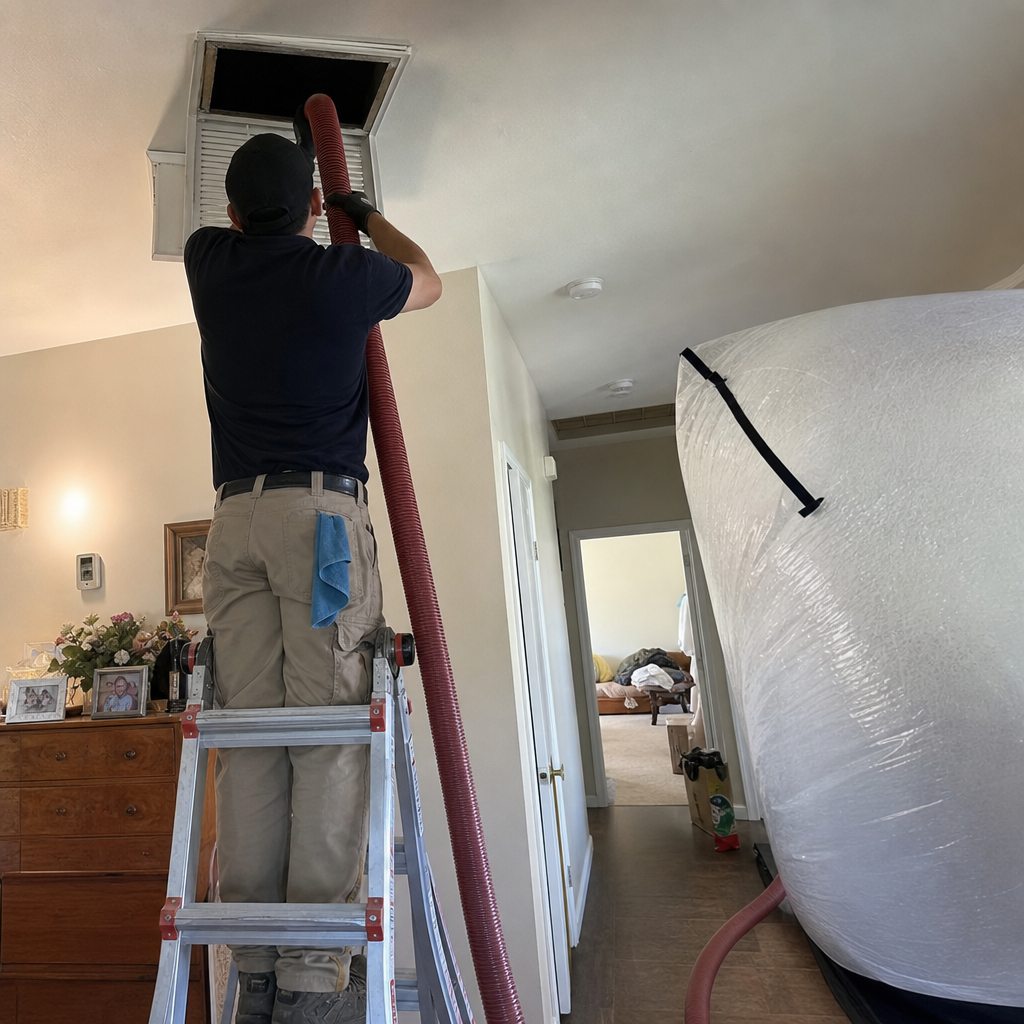
Odor Removal
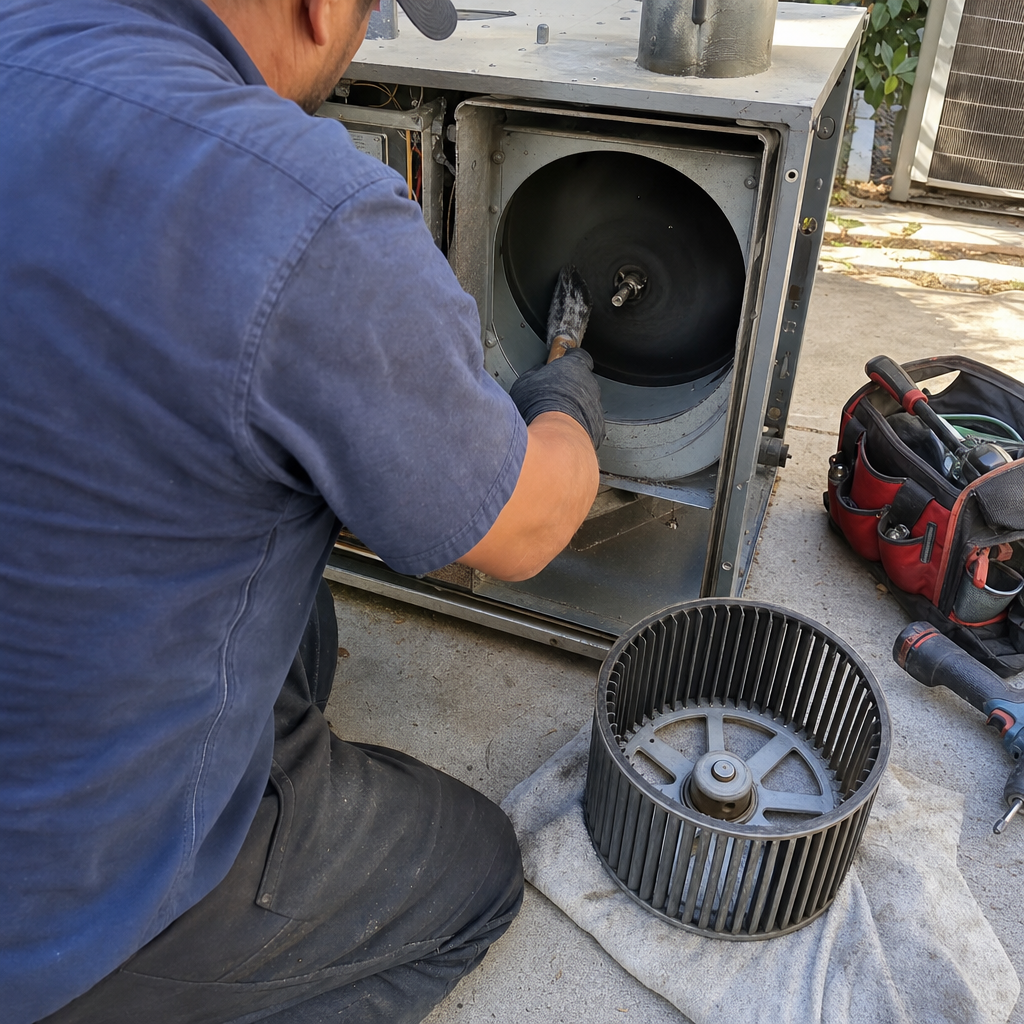
The odor profile we encounter in Corona is distinct from anywhere else in our service area. It’s not musty basement smell or pet dander — it’s a sharp, metallic “smoggy” note that homeowners near the freeway interchange describe perfectly but can’t locate. The source is diesel particulate that has worked deep into porous duct surfaces and the HVAC cabinet itself. Surface cleaning won’t touch it. Our odor removal protocol for Corona involves complete particulate extraction, then targeted treatment of the evaporator coil and plenum where soot accumulates most heavily. In severe cases — particularly in 92879 and 92882 near the interchange — we install activated carbon filtration or whole-house air purifiers to prevent odor recurrence.
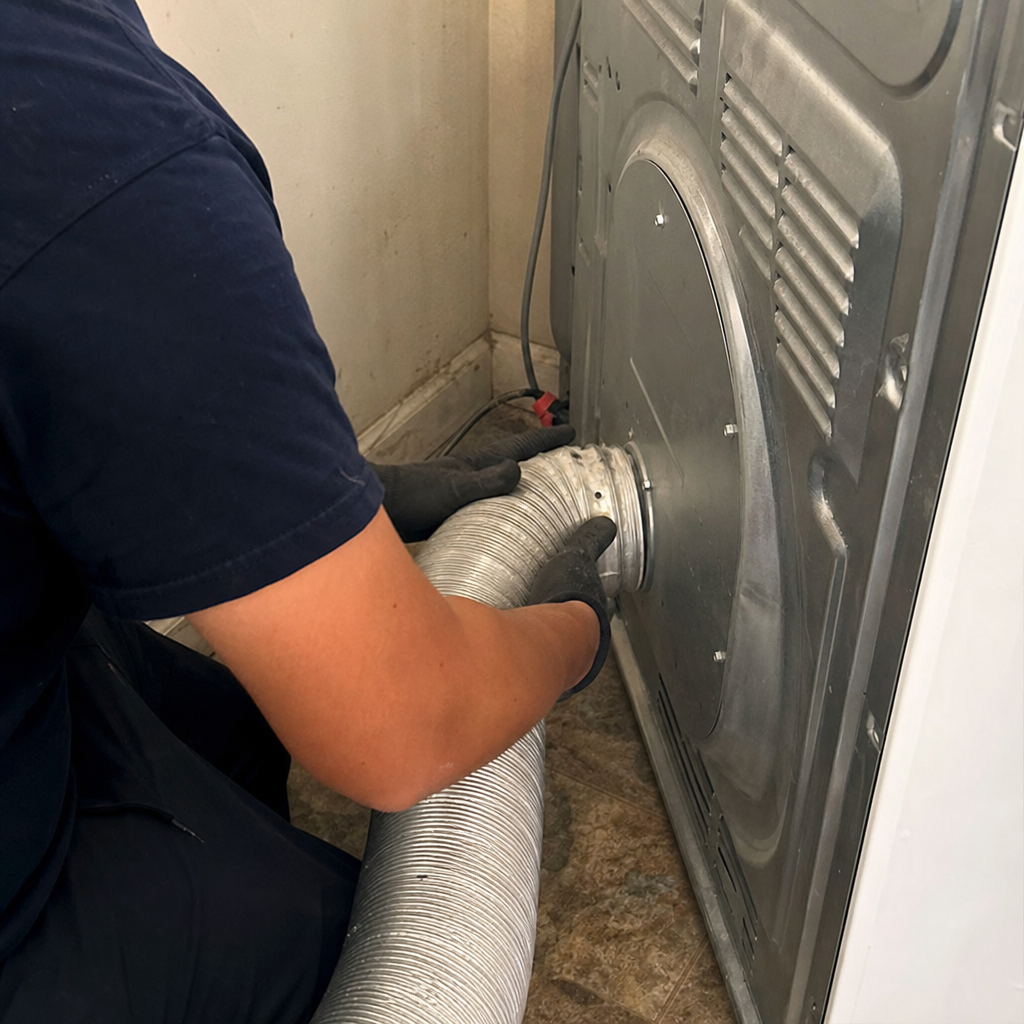
UV Light Installation
UV-C lights installed at the air handler are effective at controlling mold and bacterial growth on the evaporator coil — a common problem in Corona where systems run nearly continuously from June through September. But here’s what we tell every Corona homeowner considering UV alone: ultraviolet light will not remove diesel particulate, Santa Ana dust, or wildfire smoke from your air. It kills living organisms; it doesn’t filter dead ones. For homes near the 91/15 interchange, we almost always recommend pairing UV with mechanical filtration upgrades. We install UV systems that integrate with existing Honeywell and Aprilaire controls, sized properly for your air handler’s CFM rating. The installation typically takes 2–3 hours and can be combined with duct cleaning service.
Allergen Reduction
Corona’s allergen load is brutal during Santa Ana season — fine Mojave dust particles in the 2.5–10 micron range blow through the Santa Ana Canyon and straight into homes whose owners opened windows for the initially cool gusts. These particles bypass standard 1-inch pleated filters and embed in duct lining, where they’re re-aerosolized with every HVAC cycle. Our allergen reduction service combines thorough duct extraction with filtration assessment and upgrade recommendations. For Corona’s conditions, we typically recommend MERV 13+ filtration or whole-house electronic air cleaners, properly sized so they don’t restrict airflow and damage your system.
Air Purifier Installation
Whole-house air purifiers are where we see the biggest transformation for Corona homeowners — particularly those in the diesel-exposure zone near the interchange. We install Honeywell and Aprilaire systems, including the Aprilaire 5000 series that uses electrostatic precipitation plus media filtration to capture particles down to 0.1 microns. Unlike portable units that treat single rooms, these integrate with your existing ductwork to clean all circulated air. For a 92880 tract home we serviced off Dos Lagos Drive, this was the final piece after pre-cleaning heavy soot and sanitizing — the homeowner reported the “smoggy” smell eliminated within 48 hours of activation.
What happens when you call
- 1
A real person answersNo phone trees — you reach a local pro.
- 2
You get an upfront price rangeHonest numbers before anyone is dispatched.
- 3
A background-checked tech heads outLicensed & insured, dispatched right away.
- 4
You approve before work beginsNothing starts until you say go.
Trusted Brands We Service in Corona
We work with professional-grade equipment because Corona’s air quality demands it. Our standard duct-cleaning setup uses Rotobrush brush-and-vac systems and Nikro HEPA-filtered negative air machines — the same tools commercial facilities rely on, not consumer-grade shop vacs. For air quality upgrades, we install and service Honeywell electronic air cleaners and Aprilaire media purifiers, including the 5000 series we’ve found particularly effective for fine particulate loads. We stock common replacement media and UV bulbs locally, so Corona customers aren’t waiting weeks for parts when filters need changing or lamps need replacement.
Common Air Quality & Sanitizing Problems We See in Corona Homes
- Diesel soot film that resists standard sanitizing. In north and central Corona near the 91/15 interchange, we routinely pull return-air filters and plenums coated in fine black particulate. Standard sanitizing sprays bead up on this oily film and fail to penetrate — the bacteria and odor sources beneath remain active.
- Santa Ana dust re-aerosolizing after treatment. Homeowners call us after Santa Ana events, having noticed dark gray filters within 48 hours. If this dust has settled in duct low spots before we arrive, any sanitizing treatment will be undone when airflow re-suspends the particles. Pre-vacuuming is essential.
- Sagging flex ducts creating debris puddles. The 1980s–2000s tract homes that dominate Corona’s housing stock — especially in 92880, 92881, and 92883 — feature long flex-duct runs that sag where supports have failed. These low spots accumulate standing debris that harbors mold, making sanitizing alone insufficient until the ducts are re-tensioned and cleaned.
- Wildfire smoke penetration during Cleveland National Forest fire season. When fires burn in the adjacent national forest, Corona’s basin geography traps smoke particulate that works deep into porous duct surfaces. Surface cleaning won’t remove it; mechanical agitation with proper extraction is required before sanitizing can be effective.
Pricing for Air Quality & Sanitizing in Corona, CA
Here’s what air quality and sanitizing services actually cost in Corona’s market:
| Service | Typical Range in Corona |
|---|---|
| Whole-home duct sanitizing (bactericide application) | $275–$425 |
| Mold treatment with pre-cleaning | $450–$650 |
| Odor removal protocol (heavy soot/deep contamination) | $400–$600 |
| UV light installation (single lamp, air handler) | $350–$550 |
| Whole-house air purifier install (Honeywell/Aprilaire) | $800–$1,400 |
| Allergen reduction package (cleaning + filtration upgrade) | $500–$750 |
What moves you within these ranges? System size, contamination severity, and accessibility. A 3-ton single-zone system in a 1,400-square-foot 92880 tract home with straightforward attic access sits at the lower end. A multi-zone system in a 4,000-square-foot South Corona custom build with buried ductwork and heavy diesel-soot loading requires more time and material. We provide exact quotes after inspection — estimates are free, and we show you what we find before any work begins. Call (844) 556-2174 to schedule.
We Also Serve Cities Near Corona
Our service radius extends throughout western Riverside County. We regularly work in Home Gardens, El Cerrito Corona, Eastvale, and Norco — each with their own air quality profiles shaped by proximity to freight corridors, dairy operations, or new construction dust. If you’re unsure whether your address falls within our coverage, call and we’ll confirm.
Serving Corona, CA — Our Local Coverage Area
We’re based in the Corona area and know this community well. Use the map below to see our service coverage — if you’re nearby, we can almost certainly help.
FAQs — Air Quality & Sanitizing in Corona
That “smoggy” or diesel-like odor comes from years of accumulated particulate near the 91/15 interchange, where heavy freight traffic deposits soot that works into porous duct surfaces and the heat exchanger. When winter heating cycles begin, the warmed air releases volatile compounds trapped in this residue. The fix requires mechanical extraction of the soot film — sanitizing spray alone won’t penetrate it — followed by evaporator coil and plenum treatment. Call (844) 556-2174 for an inspection; estimates are free.
No. UV-C light kills mold and bacteria on the evaporator coil, but it does not remove diesel particulate, which is non-living material. For homes in the 92879 and 92882 zones near the interchange, we almost always recommend UV paired with upgraded mechanical filtration — typically MERV 13 media or an electronic air purifier — to capture the soot before it circulates. UV alone would leave the particulate load unchanged.
Yes — upgrading filtration first prevents immediate re-contamination after we clean and sanitize. Dark gray filters in 48 hours indicate your current filtration is inadequate for Corona’s Santa Ana dust load, which carries fine Mojave particles that bypass standard filters. We recommend assessing your filter rack’s capacity (many builder-grade systems in 92880 tracts can’t accommodate thicker media without modification), then pairing proper filtration with duct cleaning and sanitizing. Doing sanitizing without the filtration upgrade is temporary at best.
No. Sagging flex ducts with debris puddles create a protected environment where mold and bacteria colonize behind the standing material. Sanitizing spray can’t reach the duct surface through this layer, and any treatment applied on top will be undermined when airflow eventually re-suspends the debris. We re-tension or replace failed supports, mechanically extract the standing material with Rotobrush and HEPA vacuum, then apply antimicrobial treatment to the actual duct surface. This is standard protocol for 92880 and 92881 tracts with this construction era.
Yes — these systems serve different purposes and work well together. The UV light targets biological growth on the evaporator coil and drain pan, where Corona’s long cooling season creates persistent moisture. The whole-house air purifier (Honeywell or Aprilaire) captures particulate including mold spores that have already detached and are airborne. For Corona’s compounded air quality challenges, this dual approach is often the most effective long-term solution we install. We can assess your air handler’s compatibility and provide exact pricing during a free estimate visit.
Written by Eric Bailey, Owner at Meridian Air Duct Cleaning Service Riverside, serving Corona and the Inland Empire since 2013.